
Dry ice blasting guide
Dry ice blasting is a cleaning method that uses solid carbon dioxide (CO₂) pellets, known as dry ice, as the blasting material. It is a non-abrasive, non-conductive, and non-flammable cleaning technique that is environmentally friendly and leaves no secondary waste. Here’s how it works:
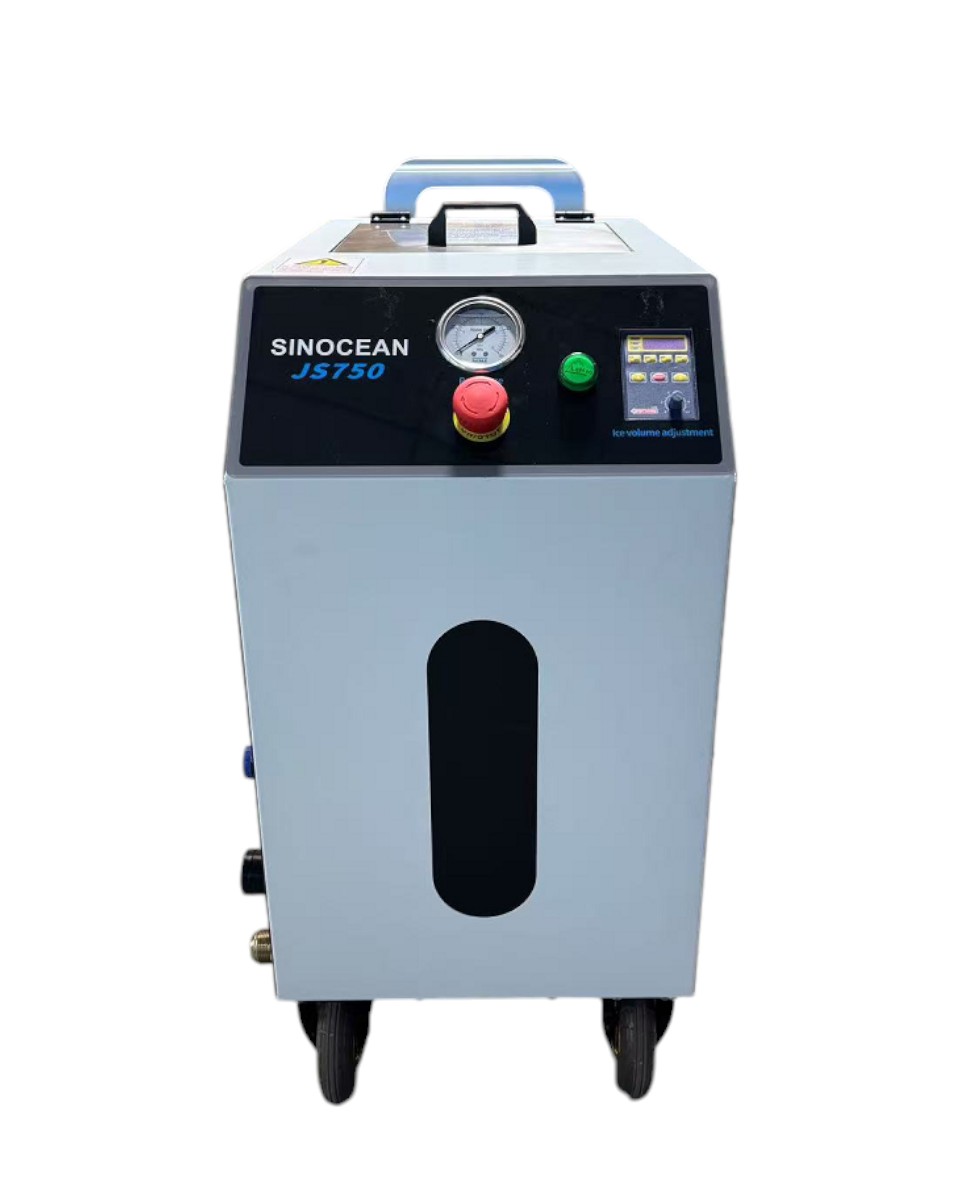
- Dry Ice Pellets: Solid CO₂ pellets are accelerated at high speeds using compressed air through a specialized blasting machine.
- Impact: When the dry ice pellets hit the surface, they sublimate (turn directly from solid to gas) upon impact.
- Cleaning Mechanism:
– Thermal Shock: The extreme cold (-78.5°C or -109.3°F) causes contaminants to contract and lose adhesion to the surface.
– Kinetic Energy: The high-speed impact dislodges dirt, grease, paint, or other contaminants.
– Sublimation: The dry ice turns into CO₂ gas, which expands and helps lift the contaminants away from the surface.
Dry ice cleaning advantages:
– Non-Abrasive: Does not damage the underlying surface.
– No Secondary Waste: The dry ice sublimates, leaving only the removed contaminants to clean up.
– Environmentally Friendly: Uses recycled CO₂ and produces no harmful chemicals.
– Non-Conductive: Safe for use on electrical equipment.
– Sanitizing: The extreme cold can kill bacteria and mold.
Dry ice cleaning applications:
– Industrial cleaning (machinery, molds, engines)
– Food processing equipment (no chemical residue)
– Fire restoration (soot and smoke damage)
– Historical restoration (gentle on delicate surfaces)
– Automotive (cleaning engines and parts)
– Aerospace (cleaning sensitive components)
Dry ice blasting is a versatile and effective cleaning solution for many industries, offering a unique combination of cleaning power and environmental benefits.